
State of Indian Economy
Agriculture – from deficit to surplus
From 43 million tonnes for 33 crore people in 1947 we now produce more than 315 million tones for 140 crore people in 2021-22. We are now a food surplus country. There has been a continuous decline in the share of agriculture in the national GDP. Between 1970 and 2015, the GDP share of agriculture has fallen from 43% to 16%, before it rose marginally. India is one of the largest agricultural product exporters in the world & entered into for the first time in 2019. During financial year 2021-22, the country recorded US$ 49.6 billion in total agriculture exports with a 20% increase from US$ 41.3 billion in 2020-21. Most of the products are farm products rather than value added ones.
Manufacturing
Manufacturing – India faces grim realities when it comes to manufacturing & associated employment, socialist policies like licence raj, government monopoly & high taxation till 1991 crippled Indian industry, it led to drain of brain & capital whereas china & south east asia took the lead, levels to entry are high – india has amended labour laws, taxation policies, licensing norms, etc. & started make in india, incentive schemes, etc to bridge the gap.
Since 1991, Iron & steel production has gone up 5 times to 130 million tones, cement 5 times to 356 million tones, India’s textile and apparel exports (including handicrafts) increased from US$ – 5 to 44.4 billion between FY 1991 – 2022.
Services
Indias large English speaking population along with one of the biggest technical talent base has allowed india to be counted as a service powerhouse. In 2021, india exported services worth more than 250 US$ billion, mostly in information technology(IT) & information technology enabled services(ITES).
Research & Development
To create jobs & dominate trade R & D is important. In recent years, product life cycles have become shorter and there has been a rising demand from industries for either new designs for upcoming versions or the development of new models altogether. Even though there are 20 million graduates, India is yet to leverage the right-sized talent pool. The reason ostensibly is curriculum sans research, a legacy of pre 1991, period.
The private sector currently contributes less than 40% to Gross Expenditure on R&D (GERD) in India. Though India’s GERD has increased three times by volume in the last ten years, the GERD as a proportion of GDP has dwindled and is among the lowest in the world. In innovation, India leapt from 81 in 2015-16 to 46 in 2021 in the Global Innovation Index (GII), but it still lags behind advanced nations. This is despite the government’s efforts and India’s commendable performance in scientific research.
India was granted 28,391 patents out of 58,502, filed in 2020-21, which is minuscule compared to what other competitive economies such as China (5.30 lakh) and the United States (3.52 lakh) won in the period.
Investment & Money Supply
Savings, investment, monetary supply, liquidity & money supply
Savings in the economy help generate surplus for investment & right mix of interest rates(lending & borrowing) are required liquidity in check to control investment & generate optimum investment for growth.
- Era of closed economy – Till 1991, RBI was primarily focused towards inflation control because savings rate in the economy was high but investments were low leading to high inflation. High rates in economy were maintained to reduce inflation & government was biggest holder of debt from banks in absence of private investors & unfavourable economic policy.
- Loosening controls -With change in economic policy in 1991 & reforms RBI started increasing liquidity in anticipation of higher investment demand. Since 1991, CRR in india has come down to between (4-6) % from a high of 15%. similarly, SLR in india has come down to between 18-22 % from a high of 38.5%.
- Mismatch in deposits & credit off take – INDIA still shows signs of a poor economy, as savings in the economy are high which mostly deposited in the banks but due to low rate of interest creates a parallel black economy. Fixed deposits in banks are still the the most preferred investment as compared to capital markets.
Fiscal Policy
Indias budget size is less than 12% of GDP, which is comparable to most developed countries. A particular area of concern has been the persistent high fiscal deficits eventually leading to high inflation & thereby defeating social welfare initiatives.
Due to recurring elections & absence of autonomous financial institutions, fiscal discipline has always been neglected even though FRBM Act was created 20 years back.
Employment
The recently released Global Employment Trends for Youth 2022 by the International Labour Organization (ILO) presented some interesting observations, making it explicitly clear that it wasn’t smooth sailing for youth around the globe. According to the report, between 2019 and 2020, individuals in the age group of 15–24 experienced much higher unemployment rates when compared to those above the age of 25. Young people were especially affected because, as the report states, the focus for most employers was to ensure retention of their existing personnel rather than new recruitments.
Unemployment in india is an outcome of factors which are both natural & sometimes outcome of misguided policies.
Natural factors – indias geography made it rich in agriculture because of seasonal rainfall, reliable market, rich drained soil, etc.
Misguided policies – Fast growing population needed free trade, manufacturing, good human resource policies, etc. planners by advocating socialism & socialistic policies did just the opposite & in the process saddled it with a un- skilled population which is un-employable, weak industry, less competitive exports,etc.
Govt. created a vast network of public sector companies to create jobs and provide support but post 1991 they are being sold off.
Till 1991, govt tried to create jobs in labour intensive agricultural sector by providing subsidies, which led to low production & unsustainable jobs.
Indias education sector imparted education which failed to deliver quality & created educated unemployed.
India creates the larget number of graduates both technical & non technical.
Though govt understands the need for a labour intensive industrial growth but it supports capital intensive job growth because that is the only thing sustainable through exports in the long run.Govt. actively supports FDI to spur manufacturing growth.
Govt. continues to support labour intensive job growth through state supported programmes as MNREGA, etc.
The govt has launched a number of programmes to address the unemployment issue facing the economy.
Infrastructure
British left india with a fairly good industrial base compared to prevailing conditions around the world. Indias pursuit of socialism destroyed the competitive advantage over the newly independent countries.
- Indian road network has become one of the largest in the world with the total road length increasing from 0.399 million km in 1951 to 4.70 million km as of 2015. Moreover, the total length of the country’s national highways has increased from 24,000 km (1947-69) to 1,37,625 km (2021). Most of the above network was created post 2000 under national golden quadrilateral programme & pradhan mantra grameen sadak yojana.
- India has emerged as the third largest producer of electricity in Asia. It has increased its electricity generation capacity from 1,362 MW in 1947 to 4,09,600 MW as of november2022. When it comes to rural electrification, the Indian government has managed to bring lights to all 18,452 villages by April 28, 2018, as compared to 3061 in 1950. India is now electricity surplus country, exporting to Bangladesh, Myanmar & Nepal.
- Railways – in 2022, the route length of Indian Railways covered 69000 kms with running track length of 1,00,000 kms.
- Ports – India has 12 major and 205 notified minor and intermediate ports. Under the National Perspective Plan for Sagarmala, six new mega ports will be developed in the country. The Indian ports and shipping industry play a vital role in sustaining growth in the country’s trade and commerce. India is the sixteenth-largest maritime country in the world with a coastline of about 7,517 kms. The Indian Government plays an important role in supporting the ports sector. It has allowed Foreign Direct Investment (FDI) of up to 100% under the automatic route for port and harbour construction and maintenance projects. It has also facilitated a 10-year tax holiday to enterprises that develop, maintain and operate ports, inland waterways and inland ports.
- Telecom –
India is the world’s second-largest telecommunications market. Tele-density stood at 84.88%, as of April 2022, total broadband subscriptions grew to 788.77 million until April 2022 and total subscriber base stood at 1.16 billion in April 2022.
In FY21, wireless subscriptions stood at 1,180.96 million, and wireless tele-density reached 86.68%.
Total broadband subscriptions in the country grew from 149.75 million in FY16 to 792.08 million in FY22 (Until December 2021). The number of wired broadband subscriptions stood at 26.43 million in FY22 (Until December 2021).
India is also the second-largest country in terms of internet subscribers. India is one of the biggest consumer of data worldwide
- Fuel – India’s crude oil production in FY22 stood at 29.7 MMT. India’s oil refining capacity stood at 248.9 MMTPA, making it the second-largest refiner in Asia. Private companies owned about 35% of the total refining capacity. The consumption volume of petroleum products in India was approximately 194 million metric tonsin fiscal year 2021, which may rise to 215 MMTPA, in 2022.
India’s crude oil import bill surged 76% to $90.3 billion in the first half of 2022-23 even as the total import quantity increased by 15% to 116.6 million tones, which for full year will stand at 230 million tonnes.
Inflation & Price level
Since independence india was an economy perennially suffering from shortages. Socialistic policies focused on control over every aspect of economy trade, production, licences, etc.
As a result of shortages, inflation was perennial problem.
Another reason behind inflation was governments profligacy in expenditure leading to recurring fiscal deficits, which further defeated poverty alleviation efforts.
FOREX & Exchange Rate
British left india in a comfortable foreign exchange situation. India’s sterling balances still stood at a comfortable £621 million (Rs 828 crores) at the end of 1949. India accounted for around 5% of global trade & pound was valued at INR 13.33, india was fairly open at this time.
CHANGE IN POLICY after independence, created trade deficits leading to payment crisis in 1991.
In 2022, FOREX stood at 640 us$ billon in 2021, but dropped 560 us$ billion in 2022, which is equivalent to 14 months of imports as compared to 21 days as it stood in 1991.
FDI (Foreign Direct Investment)
In areas & sectors where india lacks technology or wherewithal & imports a lot, foreign direct investment is one way to proceed with in the short term. India’s pre 1991 background, inconsistent policy making, slow judicial system made it difficult to attract investment, which we have tried to resolve recently & challenge the domination of china & east asia.
According to the Department for Promotion of Industry and Internal Trade (DPIIT), foreign direct investment (FDI) equity inflows to India reached US$ 72.12 billion in 2020-21 (until January 2021) while the cumulative FDI equity inflows to the country from April 2000 to January 2021 reached US$ 545.0 billion.
Taxation
Only in 2022 india collected more in direct taxes as compared to indirect taxes, an importantparameter to make taxes poor friendly, just & equitable.
ASIA UPSC
ASIA – Physical features
Asia For UPSC:
Asia comprises of 30% of the world land area & 60% of world population inhabits this continent.
Extent –
-
- Asia includes the eastern portion of the Eurasian supercontinent.
- The border between the two continents runs through the Ural Mountains, the Caucasus Mountains, and the Caspian and Black Seas.
- Asia is bordered by the Arctic, Pacific, and Indian Oceans.
- Asia can be divided into five major physical regions: mountain systems; plateaus; plains, steppes, and deserts; freshwater environments; and saltwater environments

Asia For UPSC MOUNTAINS:

Mountain Systems.
- The Himalaya mountains extend for about 2,500 kilometers (1,550 miles), separating the Indian subcontinent from the rest of Asia.
- The Indian subcontinent, once connected to Africa, collided with the Eurasian continent about 50 million to 55 million years ago, forming the Himalayas. The Indian subcontinent is still crashing northward into Asia, and the Himalayas are growing about 5 centimeters (2 inches) every year.
- The Himalayas cover more than 612,000 square kilometers (236,000 square miles), passing through the northern states of India and making up most of the terrain of Nepal and Bhutan. The Himalayas are so vast that they are composed of three different mountain belts. The northernmost belt, known as the Great Himalayas, has the highest average elevation at 6,096 meters (20,000 feet). The belt contains nine of the highest peaks in the world, which all reach more than 7,925 meters (26,000 feet) tall. This belt includes the highest mountain summit in the world, Mount Everest, which stands at 8,849 meters (29,032 feet).
- The Tien Shan mountain system stretches for about 2,400 kilometers (1,500 miles), straddling the border between Kyrgyzstan and China. The name Tien Shan means “Celestial Mountains” in Chinese. The two highest peaks in the Tien Shan are Victory Peak, which stands at 7,439 meters (24,406 feet), and Khan Tängiri Peak, which stands at 6,995 meters (22,949 feet). Tien Shan also has more than 10,100 square kilometers (3,900 square miles) of glaciers. The largest glacier is Engilchek Glacier, which is about 60 kilometers (37 miles) long.
- The Ural Mountains run for approximately 2,500 kilometers (1,550 miles) in an indirect north-south line from Russia to Kazakhstan. The Ural Mountains are some of the world’s oldest, at 250 million to 300 million years old. Millions of years of erosion have lowered the mountains significantly, and today their average elevation is between 914 and 1,220 meters (3,000 to 4,000 feet). The highest peak is Mount Narodnaya at 1,895 meters (6,217 feet).
Plateaus
Asia is home to many plateaus, areas of relatively level high ground.
The Iranian plateau covers more than 3.6 million square kilometers (1.4 million square miles), encompassing most of Iran, Afghanistan, and Pakistan. The plateau is not uniformly flat, but contains some high mountains and low river basins. The highest mountain peak is Damavand, at 5,610 meters (18,410 feet). The plateau also has two large deserts, the Dasht-e Kavir and Dasht-e Lut.
The Deccan Plateau makes up most of the southern part of India. The plateau’s average elevation is about 600 meters (2,000 feet). It is bordered by three mountain ranges: the Satpura Range in the north, and the Eastern and Western Ghats on either side. The plateau and its main waterways—the Godavari and Krishna rivers—gently slope toward the Eastern Ghats and the Bay of Bengal.
The Tibetan Plateau is usually considered the largest and highest area ever to exist in the history of Earth. Known as the “Rooftop of the World,” the plateau covers an area about half the size of the contiguous United States and averages more than 5,000 meters (16,400 feet) above sea level. The Tibetan Plateau is extremely important to the world’s water cycle because of its tremendous number of glaciers. These glaciers contain the largest volume of ice outside the poles. The ice and snow from these glaciers feed Asia’s largest rivers. Approximately 2 billion people depend on the rivers fed by the plateau’s glaciers.

Asia For UPSC Deserts:
Deserts of Asia
- The Rub’ al Khali desert, considered the world’s largest sand sea, covers an area larger than France across Saudi Arabia, Oman, the United Arab Emirates, and Yemen. It holds roughly half as much sand as Africa’s Sahara desert, even though it is 15 times smaller in size. The desert is known as the Empty Quarter because it is virtually inhospitable to humans except for Bedouin tribes that live on its edges. The Arabian Desert, the largest desert of Asia and the fourth largest desert in the world, is located in Western Asia. The massive desert of about 2,330,000 square km stretches across most parts of the Arabian Peninsula. Despite the extreme conditions, the Arabian Desert hosts some desert-adapted species like the oryx, gazelles, sand cats, lizards, etc. Many species of the desert have become extinct due to overgrazing and hunting. There is very little vegetation in the region. The desert also has areas with treacherous quicksand.
- Gobi Desert located in northern and northwestern China is Asia’s second largest desert and the world’s fifth largest desert.
- Thar Desert – Great Indian Desert or the Thar Desert is a massive desert in the Indian subcontinent’s northwestern section. It forms a natural boundary between India and Pakistan where 85% of the desert area lies within India and the rest in Pakistan.
- Taklamakan Desert is located in the Xinjiang Uyghur Autonomous Region of China
- Dasht-e Kavir, also known as the Great Salt Desert, is located in the central Iranian Plateau region.
- Dasht-e Loot, the 25th biggest desert on Earth, is located in Iran. Here, it occupies parts of the Baluchistan, Kerman, and Sistan provinces of the country. In 2016, the desert was inscribed as a UNESCO World Heritage Site.
ASIA for UPSC – Lakes & rivers
Asia For UPSC:
Lake Baikal, located in southern Russia, is the deepest lake in the world, reaching a depth of 1,620 meters (5,315 feet). The lake contains 20 percent of the world’s unfrozen freshwater, making it the largest reservoir on Earth. It is also the world’s oldest lake, at 25 million years old.
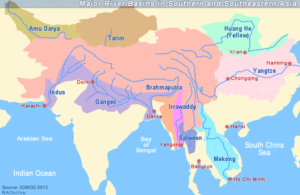
- The Yangtze is the longest river in Asia and the third longest in the world (behind the Amazon of South America and the Nile of Africa). Reaching 6,300 kilometers (3,915 miles) in length, the Yangtze moves east from the glaciers of the Tibetan Plateau to the river’s mouth on the East China Sea. The Yangtze is considered the lifeblood of China.
- It drains one-fifth of the country’s land area, is home to one-third of its population, and contributes greatly to China’s economy.
- The Tigris and Euphrates Rivers begin in the highlands of eastern Turkey and flow through Syria and Iraq, joining in the city of Qurna, Iraq, before emptying into the Persian Gulf. The land between the two rivers, known as Mesopotamia, was the center of the earliest civilizations, including Sumer and the Akkadian Empire. Today, the Tigris-Euphrates river system is under threat from increased agricultural and industrial use. These pressures have caused desertification and increased salts in the soil, severely damaging local watershed habitats.
Microwave digestion is a process by which complex organic and inorganic materials and molecules are heated via microwave energy under sealed, pressure resistant vessels, with acids and other reagents in Microwave digestion system to obtain a clear simple solution appropriate for elemental analysis. Compared with conventional digestion methods, microwave digestion is generally Quick, requires less acid or other reagents and provides better control of temperature and pressure and finally delivers a better solution that can be properly and reliably analysed for its composition. Microwave Digestion System by NUTECHANALYTICAL TECHNOLOGIES PRIVATE LIMITED can reach temperatures around 300°C, depending on the model.
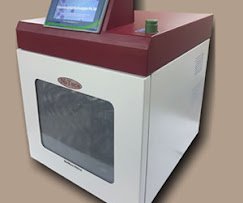
Microwave digestion
Microwave digestion is widely used before AAS (Atomic Absorption Spectroscopy), ICP-OES and ICP-MS analysis. It is applied to environmental samples such as soil, water and sludge; food and agricultural products; pharmaceuticals; chemicals; metals and minerals; biological samples; and industrial materials. The technique is particularly useful for determining trace and heavy metals because it produces a homogeneous digest with reduced contamination risk.
Microwave digestion system price
Price: In India, prices are comparably less than in western countries and vary considerably according to capacity, automation, vessel type and safety features. Current listings show systems around ₹6.5 lakh, while higher-end systems can cost approximately ₹9 lakh or more. For example, Amaze Instruments lists a system at ₹6.5 lakh, and Vimal Enterprise lists one at ₹9 lakh. Some listings show much lower prices, but these may represent different configurations or incomplete specifications, so quotations should be obtained before purchase.
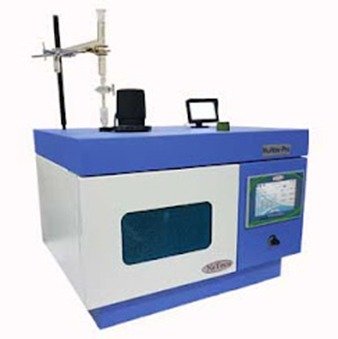
Microwave digestion system Manufacturers and suppliers
Major manufacturers/brands include NUTECHANALYTICAL TECHNOLOGIES PRIVATE LIMITED the sole INDIAN manufacturer and supplier along with brands from outside the country like Anton Paar, CEM and Milestone. Other Indian suppliers/manufacturers include Amaze , Kwality , Vimal Enterprise, National Corporation and Toshvin. NUTECH ANALYTICAL Manufactured Microwave Digestion System also provide Indian and worldwide sales and service support.
Welcome to WordPress. This is your first post. Edit or delete it, then start writing!